8.1 Spring’s Definition
An open-source lightweight application framework facilitating Java enterprise development
Application Framework
Unlike libraries/frameworks specialized for specific domains or technologies
Application frameworks encompass entire application scope comprehensively
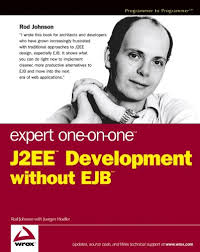
Spring originated from Rod Johnson’s J2EE technical book example code
- The book addressed design and development strategies across all J2EE application tiers
- Spring was developed incorporating core strategies for Java enterprise development across all tiers
Lightweight
- Not heavy - Contrary to excessive engineering in technologies like EJB
- Spring operates on simplest server environments (Tomcat, Jetty)
- Code remains comparatively compact and simple
Facilitating Java Enterprise Development
- Spring fundamentally removes enterprise development complexity, genuinely facilitating development
- EJB shared identical objectives but introduced greater complexity during pursuit
- Convenient application development: Developers dedicate minimal attention to complex, error-prone low-level technologies while rapidly, effectively implementing application core business logic
- Spring enables developers to focus more on application logic than framework technology
Open Source
- Apache License 2.0: Commercial product inclusion permitted without modification disclosure obligation
- Advantages: Transparent, diverse participation enabling rapid, flexible development
- Disadvantages: Uncertain continuous, stable development sustainability
- Spring combines open-source development with SpringSource enterprise-managed official development
8.2 Spring’s Objectives
Understanding objectives and utilizing as appropriate tools yields genuine value.
Enterprise Development Complexity
- Increasing technical constraints and requirements
- Handle numerous concurrent user requests with critical information/systems → Performance, security, stability, scalability considerations
- Business logic complexity increases
- Rapid business evolution → Frequent requirement and policy modifications
- Complexities 1 and 2 intertwine
Addressing Complexity
- Failed solution: EJB (forced technology and specification dependency)
- Effective solution: Spring (non-invasive approach)
- Non-invasive technology: Technology application facts do not directly appear in code. Perform only necessary technology-application work without restricting code design and implementation
Spring’s Strategies Against Complexity
Addressing Technical Complexity
- Problem 1: Inconsistent technology access approaches, environment-specific dependencies
- ⇒ Service abstraction
- Examples: Transaction abstraction, OXM abstraction, consistent exception translation for data access
- ⇒ Service abstraction
- Problem 2: Technical processing code intermixed with different-natured code
- ⇒ AOP
- Examples: Transactions, security, logging, auditing
- Cleanly separate technical code into independent modules
- ⇒ AOP
- Problem 1: Inconsistent technology access approaches, environment-specific dependencies
Addressing Business/Application Logic Complexity
- Frequently modified, error criticality
- Contemporary: Business logic resides within applications. Scalable, testable. Well-utilized object-oriented Java language enables effective business logic implementation
- Spring’s non-invasive nature facilitates object-oriented programming by removing impediments
Common Tool for Both Complexities: Object-Orientation and DI
- Spring’s motto: ‘Back to basics’ - Facilitate superior object-oriented design structure application through convenient DI technology
- Service abstraction, template/callback, AOP all based on DI
- DI: Not special technology but programming technique emerging from flexible, extensible object-oriented design, subsequently guiding toward more object-oriented design and development
8.3 POJO Programming
“Provide enterprise service technologies necessary yet separate from POJO-style developed application core logic”
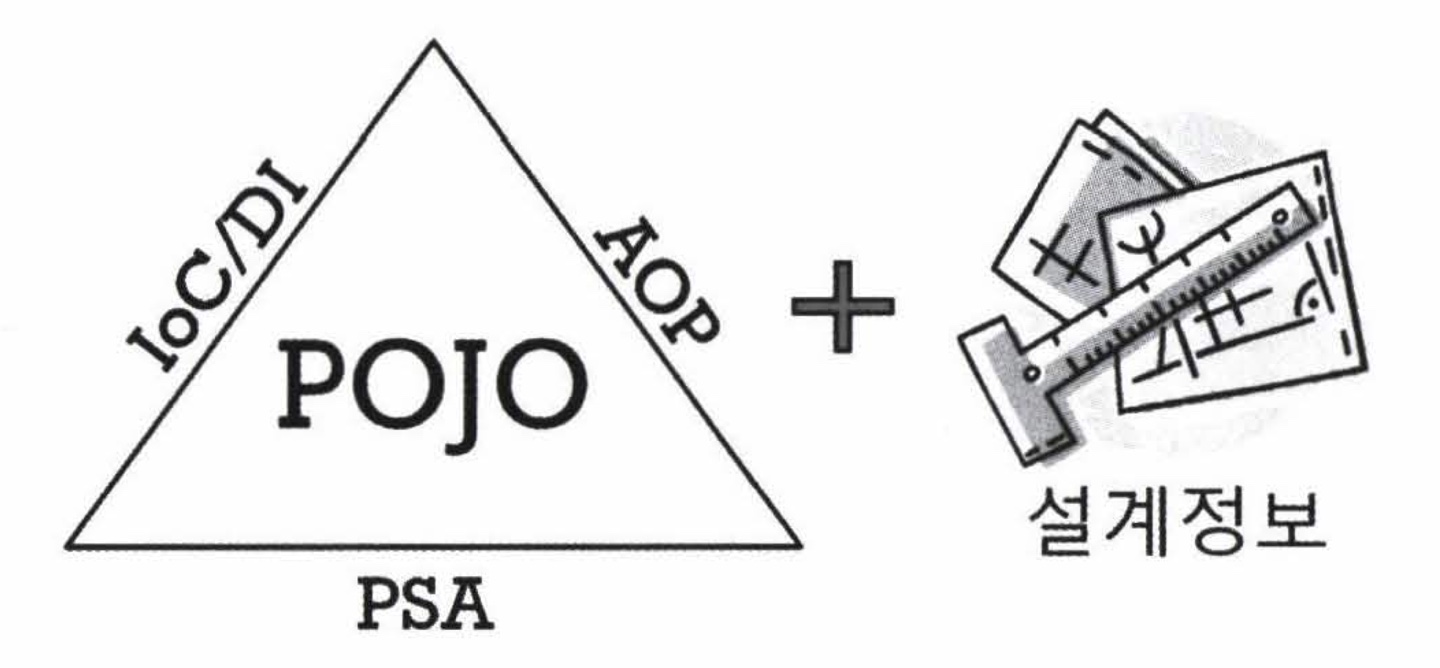
- Spring application = Application code using POJOs + Design information defining POJO relationships and operations
- IoC/DI, AOP, PSA (Portable Service Abstraction) constitute enabling technologies for POJO application development
POJO Definition
Plain Old Java Object. Martin Fowler coined the term questioning why simple Java objects receive insufficient utilization. Answer: Lack of impressive nomenclature like EJB… Hence POJO creation
POJO Conditions
- Not dependent on specific conventions
- Should depend exclusively on Java language and essential APIs ↔ EJB or Struts requiring specific class inheritance
- Not dependent on specific environments
- ↔ Code directly invoking OS-specific functionality or WebLogic server-exclusive APIs
- POJO classes containing business logic should not utilize web environment information or web technology classes/interfaces
- Even when eventual web controller connection proves inevitable, direct web environment limitation impairs alternative client usage and independent testing
- Faithful to object-oriented Java language fundamentals
- ↔ Consolidating code with different responsibilities/roles into single classes, strong coupling with other layer code
⇒ Genuine POJOs: Objects designed for reusability according to object-oriented principles, independent of environment and technology. POJO programming: Designing and developing with application core logic and functionality in such POJOs
POJO Advantages
POJO qualification conditions directly constitute POJO advantages - Clean code, object-oriented design freedom
POJO Framework
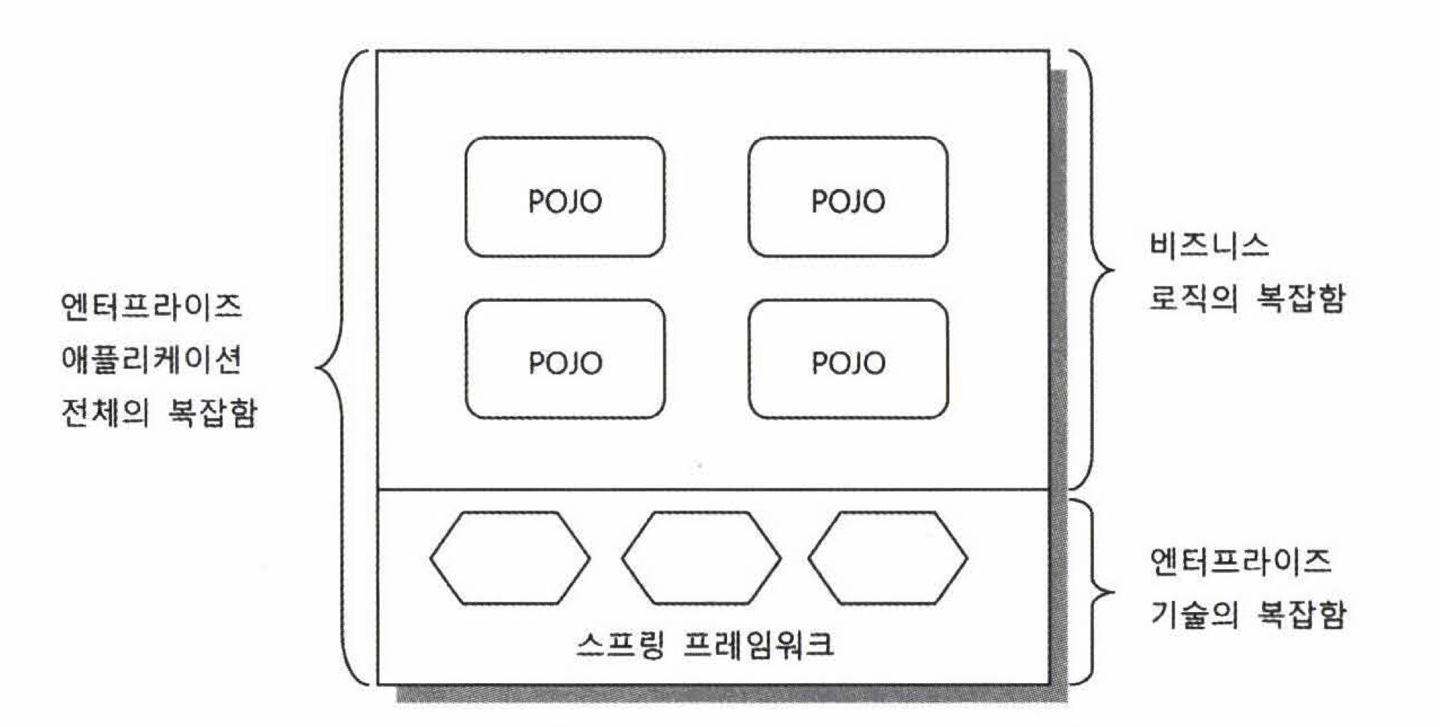
Spring intervenes exclusively in technical domains, concealing itself from business logic POJOs. Minimal data access and web UI involvement.
8.4 Spring’s Technologies
Three enabling technologies for effortless POJO programming: IoC/DI, AOP, PSA
IoC/DI
DI Rationale: Enable flexible extension. OCP (Open-Closed Principle)
Concrete DI Applications:
- Core functionality modification
- Core functionality dynamic modification
- Additional functionality supplementation
- Interface modification
- Proxies
- Templates and callbacks
- Singleton and object scopes
- Testing
AOP
While IoC/DI techniques enable POJO programming generally, certain services prove difficult to apply maintaining POJO conditions through pure object-oriented techniques alone. ⇒ AOP necessity
AOP Application Techniques:
- Dynamic proxy usage (Spring approach)
- Decorator pattern application. Simple and convenient, but additional functionality limited to method invocation points
- Language extension beyond Java language limitations
- AspectJ usage - Enables additional functionality beyond method invocations
- Requires separate AOP compiler builds or bytecode manipulation during class memory loading
- Dynamic proxy usage (Spring approach)
AOP Application Stages: Gradually introduce to avoid confusion
- Utilize pre-prepared AOP
- Policy AOP application through dedicated teams
- Liberal AOP utilization
PSA (Portable Service Abstraction)
- Transactions combine with AOP, eliminating direct service abstraction necessity
- OXM, JavaMail utilization: Write code using Spring-defined abstract APIs, specify concrete technologies and settings via XML
- Even when Spring excludes service abstraction targets, introduce abstract layers directly, define consistent APIs. Service abstraction requires exclusively DI
- Apply service abstraction for APIs with difficult testing or external-controlled configuration requirements