intro#
spring을 늘 쓰지만 자주 접하지 않는 상황에선 설정이 헷갈릴 때가 있다. 얼마 전 한 프로젝트의 bean 설정을 확인하다가 아래 코드와 같이 List타입과 List 내부에 있는 객체 타입 (편의상 List<T> 타입과 T 타입 이라고 하겠다) 의 설정이 둘 다 있는 경우를 마주했다.
 1
 2
 3
 4
 5
 6
 7
 8
 9
10
11
12
13
14
15
16
17
18
19
20
21
22
23
| @Bean
List<Cake> availableCakes() {
return List.of(
lemonCake(),
chocolateCake(),
strawberryCake()
);
}
@Bean
Cake chocolateCake() {
return new Cake("초코");
}
@Bean
Cake strawberryCake() {
return new Cake("딸기");
}
@Bean
Cake lemonCake() {
return new Cake("레몬");
}
|
List<Cake> 을 주입받아 사용하는 코드:
1
2
3
4
5
6
7
8
9
| @Component
class Bakery {
private final List<Cake> availableCakes;
Bakery(List<Cake> availableCakes) {
this.availableCakes = availableCakes;
}
}
|
(케이크가 먹고싶어서 객체이름을 이렇게 바꿔봤다..)
원래는 cake가 어떤 순서로 주입되든 상관이 없어서 이 코드는 정상적으로 동작하고 있었다. 그런데 레몬 케이크가 무조건 첫 순서가 되어야하는 요구사항이 추가되었다.
위 코드로 테스트해보니, 생각했던 것과 다르게 Bakery에 주입된 cake 리스트의 첫번째(0번째..)는 초코 케이크였다.
여러가지 방법이 있어서 순서를 픽스해서 배포는 무사히 했지만 뭔가 여전히 남아있는 궁금한 것들이 있었다.
.
궁금한 것#
List<T> 타입과 T 타입이 둘 다 bean으로 등록되어있을 때, 정확히 어떻게 동작하는가?List<T>만 정의했을 때와 동작이 어떻게 다른가? (왜 List<T>는 무시되는가)- 순서를 명시적으로 지정하는 방법은 무엇일까?
1. List<T> 타입과 T 타입이 둘 다 bean으로 등록되어있을 때, 정확히 어떻게 동작하는가?#
한가지 잊고있었던 사실은 List<T>를 선언하지 않더라도 T 타입의 bean들이 있으면 List필드로 주입이 된다는 거였다.
의존성 주입 시 스프링 컨텍스트는 타입이 같은 모든 빈 객체들을 찾아 List에 빈을 주입한다.
1
2
3
4
5
6
7
8
9
| @Bean
Cake chocolateCake() {
return new Cake("초코");
}
@Bean
Cake strawberryCake() {
return new Cake("딸기");
}
|
위 코드처럼 bean 설정하고 나면 아래 Bakery에 주입되는 List<Cake>에는 초코, 딸기 케이크가 다 포함된다.
1
2
3
4
5
6
7
8
9
| @Component
class Bakery {
private final List<Cake> availableCakes;
Bakery(List<Cake> availableCakes) {
this.availableCakes = availableCakes;
}
}
|
호옹.. 그렇다면 리스트 타입 bean은 무시하나?? 왜 무시하나??
살펴보다가 까딱 잘못 쓰면 (물론 테스트를 잘 하면 인지할 수 있지만..) 의도랑 달라질 수 있겠단 생각이 들었다.
가령 아래와 같은 코드로 작성한 경우,
1
2
3
4
5
6
7
8
9
10
11
12
13
14
15
16
17
18
19
20
21
22
23
| @Bean
List<Cake> availableCakes() {
return List.of(
lemonCake(),
chocolateCake(),
strawberryCake()
);
}
  @Bean
  Cake chocolateCake() {
      return new Cake("초코");
  }

  @Bean
  Cake strawberryCake() {
      return new Cake("딸기");
}
/** 실수로 bean 어노테이션을 빼먹었다고 가정 **/
Cake lemonCake() {
return new Cake("레몬");
}
|
⇒ @Bean으로 선언한 초코,딸기 케이크만 주입된다. (레몬 어디갔어)
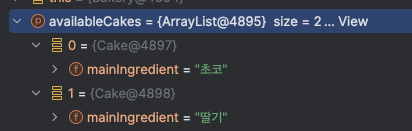
어떻게 동작하는 건지 궁금해서 스프링 프레임워크 코드에 디버그를 찍어서 살펴봤다. 위 코드처럼 List<Cake> 타입과 Cake 타입의 빈들 모두 bean으로 설정하고 시작.
** spring 버전: 6.1.14
검색을 하다가 DefaultListableBeanFactory 라는 클래스를 발견했고, 이곳 저곳 찍어보다가 주입할 객체들을 찾는 doResolveDependency 메서드를 발견했다. 이름만 봐도 관련이 있어보인다.
이 메서드는 같은 클래스의 resolveMultipleBeans 를 호출하고, 그 안에서 resolveMultipleBeanCollection가 호출된다.
resolveMultipleBeanCollection 내부를 보면
beanName (”bakery”) 에 대한 matchingBeans를 findAutowireCandidates()를 호출해서 찾아낸다.

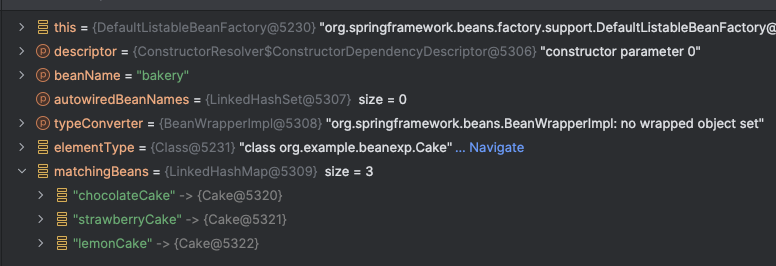
** resolveMultipleBeanCollection 코드:
1
2
3
4
5
6
7
8
9
10
11
12
13
14
15
16
17
18
19
20
21
22
23
24
25
26
27
28
29
| @Nullable
private Object resolveMultipleBeanCollection(DependencyDescriptor descriptor, @Nullable String beanName, @Nullable Set<String> autowiredBeanNames, @Nullable TypeConverter typeConverter) {
Class<?> elementType = descriptor.getResolvableType().asCollection().resolveGeneric(new int[0]);
if (elementType == null) {
return null;
} else {
Map<String, Object> matchingBeans = this.findAutowireCandidates(beanName, elementType, new MultiElementDescriptor(descriptor));
if (matchingBeans.isEmpty()) {
return null;
} else {
if (autowiredBeanNames != null) {
autowiredBeanNames.addAll(matchingBeans.keySet());
}
TypeConverter converter = typeConverter != null ? typeConverter : this.getTypeConverter();
Object result = converter.convertIfNecessary(matchingBeans.values(), descriptor.getDependencyType());
if (result instanceof List) {
List<?> list = (List)result;
if (list.size() > 1) {
Comparator<Object> comparator = this.adaptDependencyComparator(matchingBeans);
if (comparator != null) {
list.sort(comparator);
}
}
}
return result;
}
}
|
- 다시 처음 호출했던 지점으로 돌아가서,
doResolveDependency는 주입할 빈을 찾았기 때문에 바로 이것을 리턴하고 끝.
1
2
3
4
5
| Object multipleBeans = this.resolveMultipleBeans(descriptor, beanName, autowiredBeanNames, typeConverter);
if (multipleBeans != null) {
Object var26 = multipleBeans;
return var26; // 리턴!
}
|
2. List<T> 타입의 bean만 정의했을 때와 동작이 어떻게 다른가?#
List만 bean으로 설정한 뒤 똑같은 부분을 확인해봤다.
(doResolveDependency > resolveMultipleBeans > resolveMultipleBeanCollection )
resolveMultipleBeanCollection 에서는 List안의 element가 어떤 타입인지 확인하고 element의 타입을 찾는다.
1
2
| private Object resolveMultipleBeanCollection(DependencyDescriptor descriptor, @Nullable String beanName, @Nullable Set<String> autowiredBeanNames, @Nullable TypeConverter typeConverter) {
Class<?> elementType = descriptor.getResolvableType().asCollection().resolveGeneric(new int[0]);
|
- 이후
this.findAutowireCandidates 메서드를 호출할 때 elementType 인자는 Cake.class 가 된다.- 그렇지만 이번에는 List타입의 bean만 설정해주었기 때문에 이 메서드는 bean을 찾지 못하고 끝난다.
이 다음 동작은
doResolveDependency로 돌아가서, 또다시 findAutowireCandidates를 호출하는데, 이번에는 type에 List를 넘긴다.
Map<String, Object> matchingBeans = this.findAutowireCandidates(beanName, type, descriptor);- 이때는 List타입의 bean은 있으니까 matchingBeans에
availableCakes 가 담긴다. doResolveDependency 전체 코드는 너무 길어서 글 최하단에 붙여놨다.
⇒ 여기까지 본걸로 정리해보면
- 스프링 코드 상으로 주입이 필요한 필드가 List타입일 때,
- 첫번째로 List 안에 있는 element 객체를 먼저 찾는다.
- if 있으면 → 그대로 리턴. (List타입은 따로 찾지 않음)
- if 없으면 → List타입의 bean을 찾아 리턴.
3. 순서를 명시적으로 지정하는 방법은 무엇일까?#
List안에 포함되는 각각의 객체가 꼭 bean이어야 하는지 다시 생각해볼 필요가 있다. 아니라면 List 타입만 bean으로 정의하면 리스트에 넣는 순서대로 주입이 된다.
 1
 2
 3
 4
 5
 6
 7
 8
 9
10
11
12
13
14
15
16
17
18
19
20
21
22
23
| @Bean
List<Cake> availableCakes() {
return List.of(
lemonCake(),
chocolateCake(),
strawberryCake()
);
}
// @Bean
Cake chocolateCake() {
return new Cake("초코");
}
// @Bean
Cake strawberryCake() {
return new Cake("딸기");
}
// @Bean
Cake lemonCake() {
return new Cake("레몬");
}
|
1
2
3
4
5
6
7
8
9
10
| @Test
void test1() {
List<Cake> actual = sut.getAvailableCakes();
assertThat(actual).hasSize(3);
assertThat(actual.get(0).getMainIngredient()).isEqualTo("레몬");
assertThat(actual.get(1).getMainIngredient()).isEqualTo("초코");
assertThat(actual.get(2).getMainIngredient()).isEqualTo("딸기");
}
// => 통과한다.
|
@Order 를 사용하기
- 기본적으로는 scan순서에 따라 bean이 정렬이 되어있는데,
@Order로 정렬을 하게 되면 - 지정된
@Order 의 값에 따라 bean 순서가 정렬이 된다.
1
2
3
4
5
6
7
8
9
10
11
| @Bean
@Order(2)
Cake chocolateCake() {
return new Cake("초코");
}
@Bean
@Order(1)
Cake strawberryCake() {
return new Cake("딸기");
}
|
⇒ 결과
1
2
3
4
5
6
7
8
9
| @Test
void test1() {
List<Cake> actual = sut.getAvailableCakes();
assertThat(actual).hasSize(2);
assertThat(actual.get(0).getMainIngredient()).isEqualTo("딸기");
assertThat(actual.get(1).getMainIngredient()).isEqualTo("초코");
}
// => 통과한다.
|
spring문서에 나와있는 방법이고 @Order 만 붙이면 되어서 간편하긴 한데, 아쉬운 것은 각각의 bean 메서드를 확인해야만 전체 순서를 알 수 있다는 것.. 나중의 나 / 다른 팀원에게 어려울 수 있다.
- Composite로 만들기
주입받는 객체 쪽(지금 예제에서는 Bakery) 을 수정할 여지가 있다면, List타입으로 주입받지 않고 Cake를 주입받게 한 다음 Composite Cake를 만들 수도 있다. (Composite객체에서 리스트를 처리)
1
2
3
4
5
6
7
8
| @Component
class Bakery {
private final Cake availableCake;
Bakery(Cake cake) {
this.availableCake = cake;
}
}
|
1
2
3
4
5
6
7
8
9
10
11
12
13
14
15
16
17
18
19
20
21
22
23
24
25
26
27
28
| @Bean
@Primary
Cake cakeComposite(
Cake lemonCake,
Cake chocolateCake,
Cake strawberryCake
) {
List<Cake> cakes = new ArrayList<>();
cakes.add(lemonCake);
cakes.add(chocolateCake);
cakes.add(strawberryCake);
return new CakeComposite(cakes);
}
@Bean
Cake chocolateCake() {
return new Cake("초코");
}
@Bean
Cake strawberryCake() {
return new Cake("딸기");
}
@Bean
Cake lemonCake() {
return new Cake("레몬");
}
|
어떤 방법을 선택할지 고민하기 전에 근본적으로 왜 여기에서 순서를 지정해야하는지, 다른 방법으로 더 심플하게 해결할 수는 없는지도 생각해봐야할 것 같다. ///
** 참고: doResolveDependency() 전체 코드
 1
 2
 3
 4
 5
 6
 7
 8
 9
10
11
12
13
14
15
16
17
18
19
20
21
22
23
24
25
26
27
28
29
30
31
32
33
34
35
36
37
38
39
40
41
42
43
44
45
46
47
48
49
50
51
52
53
54
55
56
57
58
59
60
61
62
63
64
65
66
67
68
69
70
71
72
73
74
75
76
77
78
79
80
81
82
83
84
85
86
87
88
89
90
91
92
93
94
95
96
97
98
99
100
101
102
103
104
| @Nullable
public Object doResolveDependency(DependencyDescriptor descriptor, @Nullable String beanName, @Nullable Set<String> autowiredBeanNames, @Nullable TypeConverter typeConverter) throws BeansException {
InjectionPoint previousInjectionPoint = ConstructorResolver.setCurrentInjectionPoint(descriptor);
Object type;
try {
Object shortcut = descriptor.resolveShortcut(this);
if (shortcut == null) {
Class<?> type = descriptor.getDependencyType();
Object value = this.getAutowireCandidateResolver().getSuggestedValue(descriptor);
if (value == null) {
Object multipleBeans = this.resolveMultipleBeans(descriptor, beanName, autowiredBeanNames, typeConverter);
if (multipleBeans != null) {
Object var26 = multipleBeans;
return var26;
}
Map<String, Object> matchingBeans = this.findAutowireCandidates(beanName, type, descriptor);
if (!matchingBeans.isEmpty()) {
Object instanceCandidate;
String autowiredBeanName;
if (matchingBeans.size() > 1) {
autowiredBeanName = this.determineAutowireCandidate(matchingBeans, descriptor);
if (autowiredBeanName == null) {
if (!this.isRequired(descriptor) && this.indicatesArrayCollectionOrMap(type)) {
Object var31 = null;
return var31;
}
Object result = descriptor.resolveNotUnique(descriptor.getResolvableType(), matchingBeans);
return result;
}
instanceCandidate = matchingBeans.get(autowiredBeanName);
} else {
Map.Entry<String, Object> entry = (Map.Entry)matchingBeans.entrySet().iterator().next();
autowiredBeanName = (String)entry.getKey();
instanceCandidate = entry.getValue();
}
if (autowiredBeanNames != null) {
autowiredBeanNames.add(autowiredBeanName);
}
if (instanceCandidate instanceof Class) {
instanceCandidate = descriptor.resolveCandidate(autowiredBeanName, type, this);
}
Object result = instanceCandidate;
if (instanceCandidate instanceof NullBean) {
if (this.isRequired(descriptor)) {
this.raiseNoMatchingBeanFound(type, descriptor.getResolvableType(), descriptor);
}
result = null;
}
if (!ClassUtils.isAssignableValue(type, result)) {
throw new BeanNotOfRequiredTypeException(autowiredBeanName, type, instanceCandidate.getClass());
}
Object var14 = result;
return var14;
}
multipleBeans = this.resolveMultipleBeansFallback(descriptor, beanName, autowiredBeanNames, typeConverter);
if (multipleBeans != null) {
Object var29 = multipleBeans;
return var29;
}
if (this.isRequired(descriptor)) {
this.raiseNoMatchingBeanFound(type, descriptor.getResolvableType(), descriptor);
}
Object var28 = null;
return var28;
}
if (value instanceof String) {
String strValue = (String)value;
String resolvedValue = this.resolveEmbeddedValue(strValue);
BeanDefinition bd = beanName != null && this.containsBean(beanName) ? this.getMergedBeanDefinition(beanName) : null;
value = this.evaluateBeanDefinitionString(resolvedValue, bd);
}
TypeConverter converter = typeConverter != null ? typeConverter : this.getTypeConverter();
try {
Object var24 = converter.convertIfNecessary(value, type, descriptor.getTypeDescriptor());
return var24;
} catch (UnsupportedOperationException var18) {
Object var27 = descriptor.getField() != null ? converter.convertIfNecessary(value, type, descriptor.getField()) : converter.convertIfNecessary(value, type, descriptor.getMethodParameter());
return var27;
}
}
type = shortcut;
} finally {
ConstructorResolver.setCurrentInjectionPoint(previousInjectionPoint);
}
return type;
}
|